











Web Development Trends for 2026
The web development landscape has changed more in the last three years than it did over the entire previous decade. In 2026, websites will no longer be just digital storefronts; they will become smart, interactive, and personalized spaces where each user experiences something unique. The combination of artificial intelligence, speed, accessibility, and emotional design will shape the future of the internet.
1. AI-Powered Websites
AI will no longer be an add-on tool, but the backbone of web development.
In 2026, websites will be able to understand user behavior, deliver tailored content, and predict users’ needs.
💡 Examples:
1. Natural-language chatbots that actually help, not just respond.
2. Interfaces that change based on the user’s time of day, weather, or location.
3. Automatic content generators and adaptive design.
- Developers will incorporate AI APIs such as OpenAI, Gemini, and HuggingFace, integrated directly into frameworks like Next.js or Laravel.
2. Ultra-Fast Websites with Smart Rendering
Speed will be a decisive factor for SEO and conversion.
Google will prioritize sites that load in under 2 seconds, even with multimedia content.
🚀 The keys:
1. Use of global CDNs and hybrid rendering (SSR + SSG).
2. Automatic AI image compression.
3. Smart lazy loading and font optimization.
4. Migration from traditional WordPress sites to modern frameworks such as Next.js, Astro, and Remix.
- Tip: a fast website doesn’t just improve rankings, it also increases conversions by up to 30%.
3. Emotional Web Design and Visual Storytelling
In 2026, websites will stop being static and become emotional and narrative-driven.
Every scroll will tell a story, and every transition will be part of a visual experience.
🌙 Key trends:
1. Smooth animations and micro-interactions.
2. Scroll storytelling: scrolling that reveals the story step by step.
3. Three-dimensional designs with realistic textures and depth effects.
4. Expressive typography: custom fonts as an emotional element.
- Design will focus less on “looking pretty” and more on feeling alive.
4. Immersive Experiences and Web 3.0
The evolution toward Web 3.0 will bring more connected, decentralized, and interactive websites.
Digital experiences will feel closer to a video game than to a traditional web page.
💻 Practical applications:
1. Navigable 3D spaces for hotels, real estate developments, or online stores.
2. Integration of tokens, memberships, and exclusive experiences with blockchain.
3. Augmented reality (AR) and virtual reality (VR) accessible from the browser.
- Web development will no longer be flat: it will be immersive and multisensory.
5. Accessibility and Digital Ethics
Accessibility will no longer be optional.
Websites will need to be inclusive, secure, and empathetic toward all users.
🧠 Actions that will set the trend:
1. Automatic adaptations for people with visual or hearing impairments.
2. Interfaces with dark mode, adjustable text, and voice reading.
3. Experiences without invasive tracking: privacy as a differentiating value.
- Brands that invest in accessibility will be rewarded with better rankings and greater user trust.
6. Modular Design and No-Code Building
2026 will consolidate the era of No-Code and Low-Code, in which designers and entrepreneurs will be able to create web projects without coding.
Tools such as Framer, Webflow, Softr, and Bubble will make it possible to:
1. Prototype and launch quickly.
2. Create scalable modular systems.
3. Integrate AI to generate complete sections or automatic copy.
- This will free up developers’ time to focus on more complex and innovative projects.
7. Full Integration of SEO + UX + Data
Simply “having a pretty website” will no longer be enough.
Success will depend on how the site combines technical SEO, user experience, and advanced analytics.
🔍 Keys for 2026:
1. Structured data in JSON-LD to appear in ChatGPT and Google Answers.
2. Microdata for products, events, and reviews.
3. AI heatmaps to understand clicks and movements.
4. Native integration with CRMs and automation tools.
- The goal: every page must serve a measurable purpose.
8. Functional Minimalism and Responsible Design
Fewer elements, more intention.
2026 will bring a trend toward minimalist, sustainable, and energy-efficient websites.
🌱 Features:
1. Light or neutral backgrounds.
2. Removal of unnecessary elements.
3. Servers optimized for low energy consumption.
4. Priority on clarity, readability, and purpose.
- A good website isn’t the one with the most animations, but the one that conveys more with less.

Conclusion
Web development in 2026 will focus on intelligence, emotion, and accessibility. Websites will stop being static tools and become living ecosystems, where every user will have a different experience.
Brands that understand this new era will not only have a beautiful website, but a real competitive advantage.
POSTS
THE LATEST
Desarrollo Web
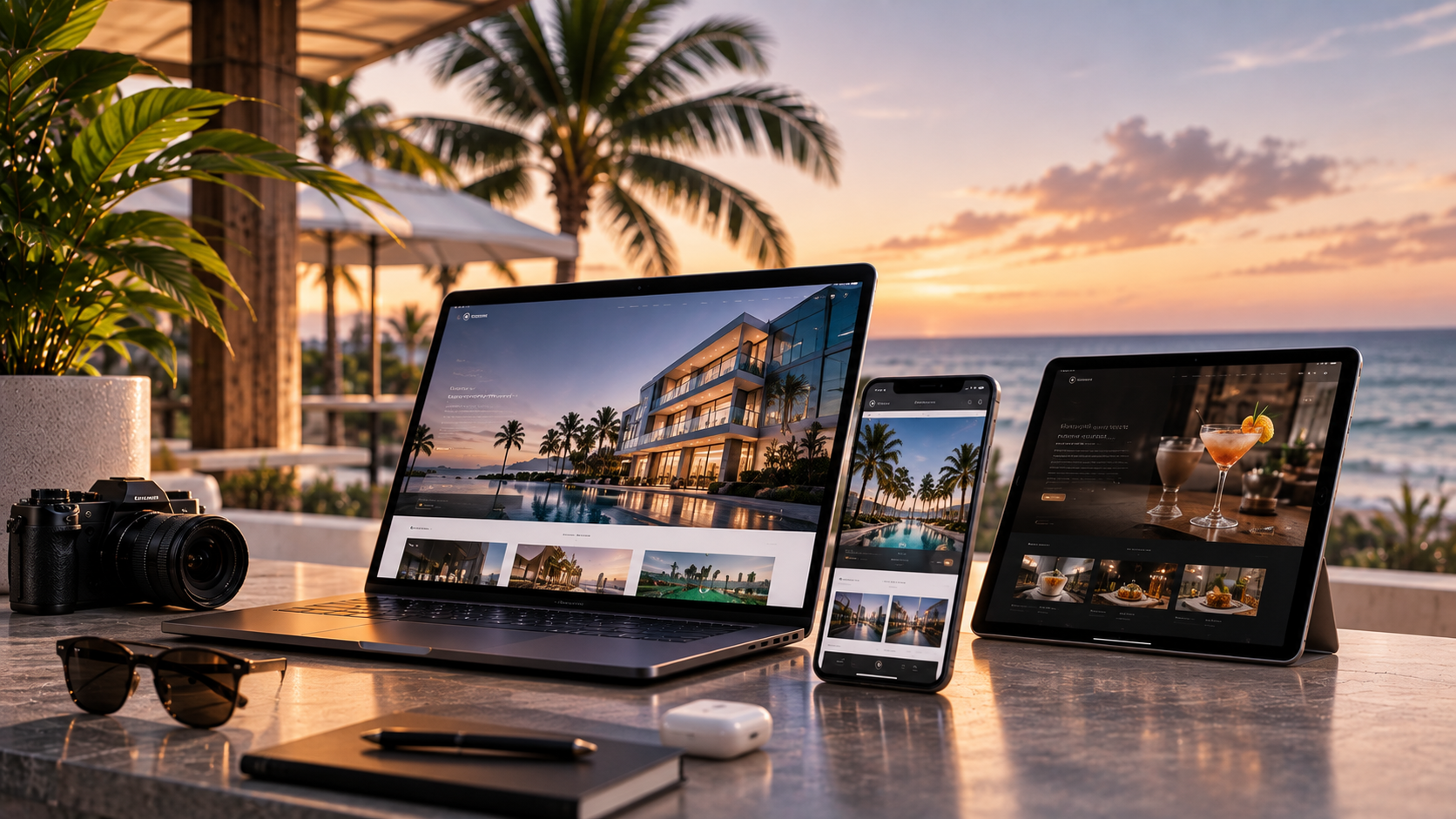
5 Web Development Companies in Cancún
Choosing a web development company in Cancun starts with defining what you need your website to do: showcase a brand, generate inquiries, sell products, or connect services with a more complex operation. This decision makes it easier to compare proposals clearly and find a team capable of handling both the design and technical aspects.
By Rodrigo García
READ ARTICLE
Publicidad
Mexico Real Estate in 2027: The 10 Marketing Essentials for Selling a Development
Where buyer demand comes from, how to approach different markets, and why a development needs much more than a logo.
By Rodrigo García
READ ARTICLE
Marketing
The 10 Best Marketing Agencies in Mexico for 2027: History, Clients, Results, and Awards
Marketing in Mexico is entering a new era. Discover ten agencies that stand out for their track record, creativity, client portfolios, innovation capabilities, and results as we look ahead to 2027.
By Rodrigo García
READ ARTICLE